Working a 10-hour shift can make healthy eating feel impossible. By the time you get home, cooking a full meal may be the last thing you want to do. During work, convenience often wins: restaurant meals, packaged snacks, sugary drinks, or whatever is quickest from the vending machine.
But eating well during long shifts doesn’t require spending hours in the kitchen. The key is to make healthy food the easiest option available. With a little planning and a few simple food shortcuts, you can eat balanced meals even when your schedule is packed.
Why Long Shifts Make Healthy Eating Difficult
Long working hours can disrupt normal meal routines. You may skip breakfast, eat lunch in a hurry, snack throughout the day, or arrive home extremely hungry and order takeout.
Shift workers can also find themselves surrounded by fast food and vending-machine options, particularly when working late or overnight. CDC guidance recommends bringing food from home, choosing smaller portions when appropriate, and avoiding excessive caffeine late in a shift because it can interfere with sleep. (CDC Stacks)
The solution isn’t a perfect diet. It’s creating a system that works when you’re tired and short on time.
1. Stop Trying to Cook Every Day
One of the biggest mistakes busy workers make is thinking healthy eating means preparing a completely different meal every night.
Instead, cook once and eat several times.
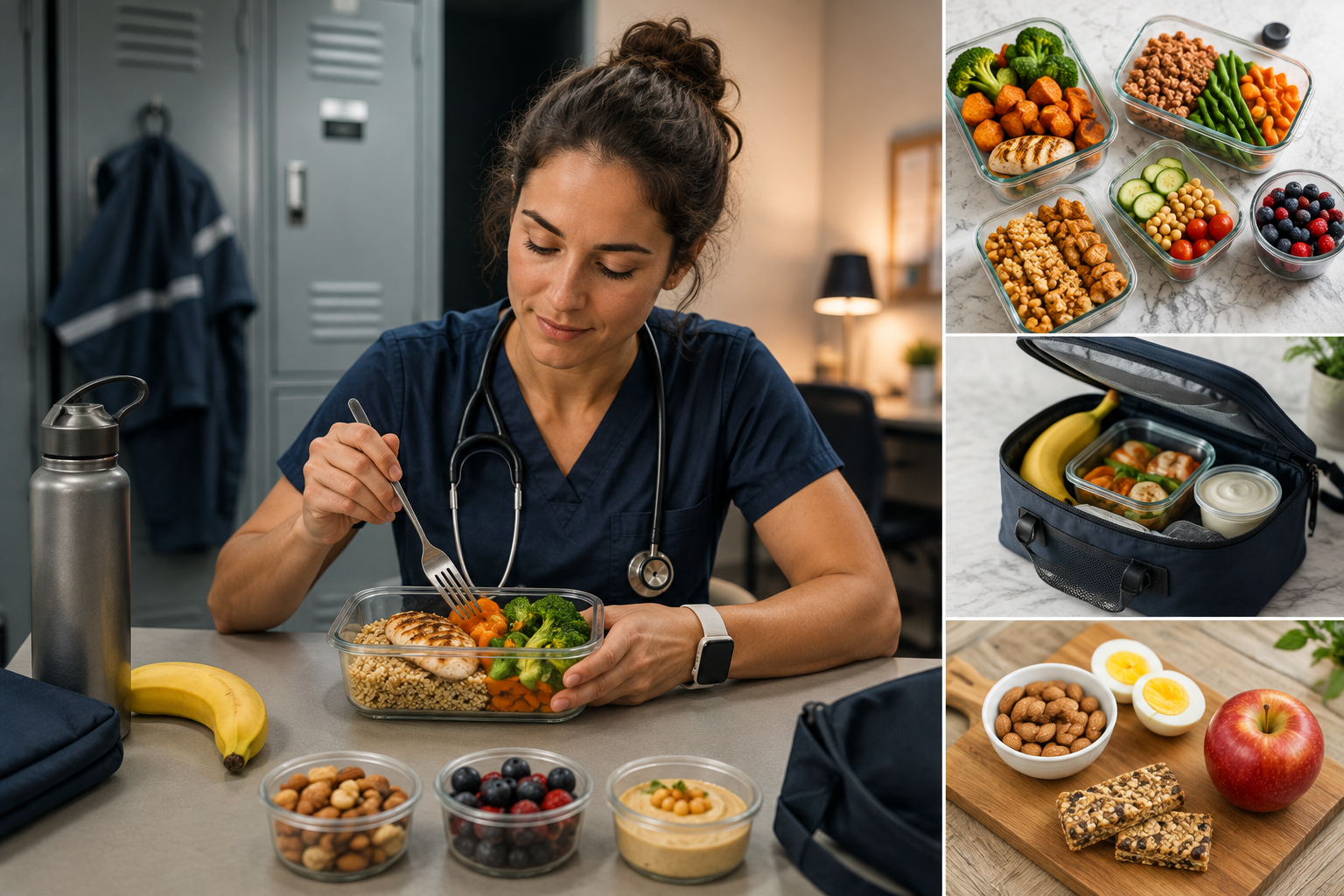
Set aside one short preparation session each week. Cook a protein such as chicken, eggs, beans, lentils, or tofu. Prepare a carbohydrate such as rice, potatoes, or whole-grain pasta, and keep washed or frozen vegetables ready.
You can then combine the same ingredients differently throughout the week.
For example:
- Chicken + rice + vegetables
- Chicken wrap + salad
- Rice + beans + vegetables
- Eggs + toast + fruit
USDA MyPlate recommends preparing ingredients such as vegetables, grains, and protein ahead of time so meals can be assembled quickly on busy days. (MyPlate)
2. Build Your Meal Around Three Things
You don’t need to count every calorie to create a better work meal.
Think in terms of protein + produce + a satisfying carbohydrate.
Protein can come from chicken, fish, eggs, yogurt, paneer, tofu, beans, or lentils. Add vegetables or fruit for fiber and micronutrients, then include rice, oats, potatoes, whole-grain bread, or another carbohydrate that gives you energy.
This simple formula is much easier to follow than complicated meal plans.
3. Keep Emergency Meals at Work
Your backup food matters.
Keep a few shelf-stable options at work for days when you forget your lunch or your schedule suddenly changes. Examples include nuts, roasted chickpeas, whole-grain crackers, canned beans or fish, oats, and dried or shelf-stable fruit.
If you have access to a refrigerator, you can also keep yogurt, fruit, boiled eggs, cheese, or prepared meals available.
Having food ready removes the “I’m starving, so I’ll order anything” problem.
CDC/NIOSH guidance similarly emphasizes packing filling meals and snacks and using practical options such as coolers or insulated containers when refrigeration or heating isn’t available. (CDC Stacks)
4. Make Breakfast Almost Automatic
Don’t make breakfast another decision you have to make when you’re already rushing.
Choose two or three repeatable options:
Option 1: Oats + yogurt + fruit + nuts
Option 2: Eggs + whole-grain toast + fruit
Option 3: Greek yogurt + fruit + oats or granola
Prepare what you can the night before. The goal is not variety every morning; it’s consistency.
5. Be Smart When You Have to Eat Out
Sometimes you simply can’t bring food from home. That’s okay.
Instead of thinking, “I ruined my diet,” look for the best available combination.
Choose grilled or roasted protein when possible, add vegetables or salad, choose a reasonable portion of rice or another carbohydrate, and limit heavily fried foods and sugary drinks.
If portions are huge, save part for later rather than feeling obligated to finish everything.
6. Don’t Ignore Hydration and Caffeine
Long shifts can make it easy to replace water with coffee, energy drinks, or soda.
Keep a water bottle with you and make drinking water part of your routine. Caffeine can be useful for alertness, but consuming it too late in a shift may make it harder to sleep afterward. Sleep Foundation recommends avoiding caffeine several hours before your intended bedtime, particularly for shift workers. (Sleep Foundation)
7. If You Work Nights, Keep Meals Light
Night-shift workers face an additional challenge because eating patterns can conflict with the body’s normal sleep-wake rhythm.
Rather than relying on a huge meal in the middle of the night, consider a lighter meal or snack during the shift and a more substantial meal at an appropriate time around your sleep schedule. Evidence and guidance for shift workers generally favor avoiding very large meals close to the main sleep period. (Sleep Foundation)
The 10-Minute Healthy Eating Rule
You don’t need a perfect meal-prep routine.
Start with one rule:
Make your next healthy meal take less than 10 minutes to assemble.
Keep cooked protein, ready-to-eat vegetables, fruit, simple carbohydrates, and healthy snacks available. When healthy food is already prepared, you don’t need motivation after a 10-hour shift—you just need to put the meal together. Healthy eating with a busy job isn’t about cooking more. It’s about making fewer food decisions when you’re exhausted. Plan once, prepare a few basics, keep emergency foods available, and make the convenient choice a healthy one.